Cato Networks
Cato Networks Expand SASE Footprint In The UAE With E& Partnership
Connected Networks is excited to announce a further expansion of our long-standing partnership with Cato Networks.
Read more

If your Doha office feels slow, the reason is almost certainly the Red Sea. Most businesses seeking enterprise connectivity in Qatar keep their compute in Northern Europe — AWS Frankfurt, Azure Netherlands, a private DC in London or Amsterdam.
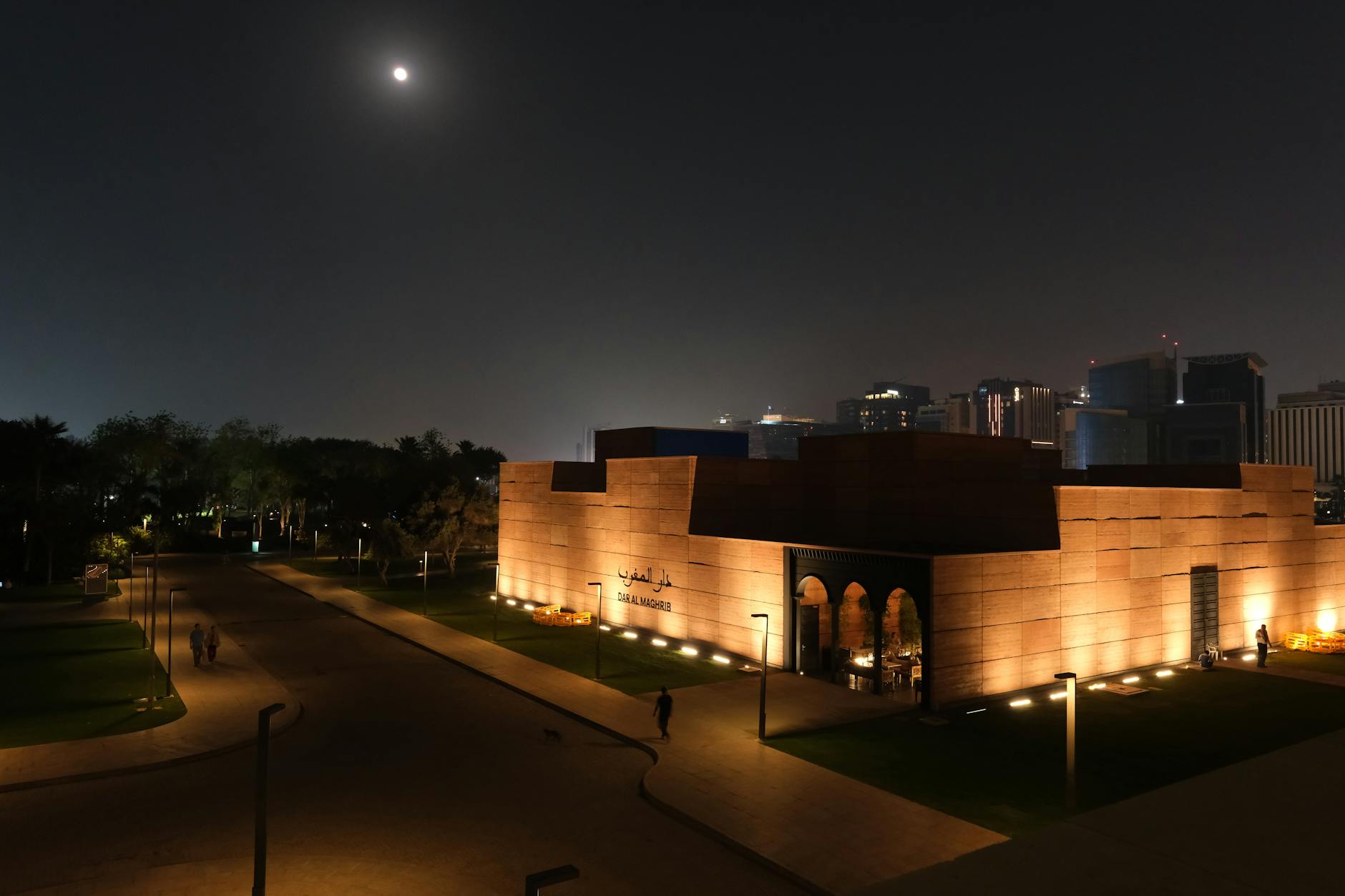
If your Doha office feels slow, the reason is almost certainly the Red Sea. Most businesses seeking enterprise connectivity in Qatar keep their compute in Northern Europe — AWS Frankfurt, Azure Netherlands, a private DC in London or Amsterdam.
If your Doha office feels slow, the reason is almost certainly the Red Sea. Most businesses seeking enterprise connectivity in Qatar keep their compute in Northern Europe — AWS Frankfurt, Azure Netherlands, a private DC in London or Amsterdam. Every user in Doha is routing traffic through one of the world's most congested submarine cable corridors just to reach their own infrastructure. And there's a carrier in this market with a completely different cable path that most of their competitors have never considered.
Qatar's enterprise internet market is a regulated duopoly at the retail level. Ooredoo (formerly Q-Tel, state majority-owned) and Vodafone Qatar are the two licensed retail operators, and pricing reflects the lack of competition. You're looking at circuit costs 15 to 30 times higher than equivalent capacity in mature European markets. That's not a negotiating point. That's just the market.
But the cable infrastructure is more diverse than the duopoly framing suggests. Ooredoo serves as a landing party for FALCON (the primary Red Sea route), and in March 2025 also landed the AAE-1 (Asia-Africa-Europe-1) cable — a 25,000km system connecting Southeast Asia to Europe. GBI (Gulf Bridge International) is co-owned by both Ooredoo and Vodafone Qatar, with GBI's own headquarters in the Qatar Science & Technology Park. The question isn't whether cables exist — it's whether your carrier is using the right one for your traffic.
What most enterprise buyers don't know is that there's a third option at the wholesale layer. Kalaam Telecom operates across the GCC with a fully owned terrestrial cable system — the KNOT — running through Kuwait, Bahrain, Saudi Arabia, the UAE and Qatar. They also co-own the EIG (Europe India Gateway) submarine cable: 15,000km, 12 countries, connecting the Gulf to Europe via a route that doesn't depend on the Red Sea segment of FALCON. We work with Kalaam directly — and in our experience, they're the best conversation most Qatar enterprises have never had.
Looking ahead: Ooredoo is building the FIG (Fibre in Gulf) cable — a 720Tbps system announced in January 2025 connecting Qatar, UAE, Bahrain, Saudi Arabia, Kuwait, Oman and Iraq, due 2027. Ooredoo is also investing over $500 million in a new terrestrial fibre route to Europe via Iraq and Turkey — specifically designed to bypass the Red Sea. Qatar's international infrastructure is about to change significantly. The current duopoly routing problem has a shelf life.
Last-mile isn't the bottleneck in Doha. Fibre is well deployed across West Bay, Lusail, and the Qatar Financial Centre, and carrier availability at the building level is generally good. We have existing connectivity into Meeza M-VAULT — Qatar's primary Tier 3+ data centre (a Qatar Foundation venture at QSTP, currently operating at 97% capacity with a 44MW expansion underway). Delivery to co-location customers there moves faster than a greenfield build.
Doha now has two Internet Exchange Points: QIXP (hosted in Meeza M-VAULT 2, 19 active participants as of mid-2025) and Doha IX — launched by Ooredoo in partnership with DE-CIX, providing direct peering with Microsoft (MAPS) and Google Cloud. For buyers with cloud-heavy workloads, local peering to Microsoft and Google is now a real option in Doha.
The ask is almost always the same: reliable, performant connectivity from a Doha office to European cloud and data centre infrastructure, with a service wrapper that actually picks up the phone when something goes wrong. We've put this in place for international law firms running their Gulf practices out of QFC and financial services businesses with client-facing operations in Doha — sectors where a slow connection isn't a minor inconvenience, it's a compliance and reputational issue.
Our starting point is always the routing question. Where is your compute? If the answer is Northern Europe — which it usually is — we build carrier selection around that. Kalaam's EIG cable and KNOT terrestrial infrastructure gives us a path to Frankfurt and Amsterdam that bypasses the Red Sea congestion on FALCON. For clients where resilience is non-negotiable, we add carrier diversity across Vodafone Qatar and Kalaam: separate physical paths on separate cable systems. That's what Secure IP looks like in a market like Qatar.
Delivery timelines in Qatar are 8–12 weeks. That's not fast by Western European standards — it's the reality of a regulated market, and anyone telling you otherwise is setting you up for disappointment.
Most Qatar enterprises go to Ooredoo or Vodafone Qatar. That's understandable — they're the obvious choices, they have sales teams in the market, and nobody gets fired for buying from the incumbent. But both carriers route international traffic via the same Red Sea cable corridor by default, both charge the same regulated premium, and both have a customer service track record that becomes a problem when you need emergency escalation at 2am during a critical outage.
So why does it keep happening? Because most buyers don't know there's an alternative, and the major carriers have no incentive to tell them.
We've had clients come to us after years of fighting poor performance on Ooredoo circuits, convinced their problems were unsolvable because "that's just Qatar." They weren't. The issue was a routing path that was never optimised for their Northern European compute, on a carrier that had no financial incentive to fix it.
We know which carriers have which cables, and we know which cables matter for your specific traffic patterns. That's not a small thing when bandwidth costs 20 times what it does in London.
Our clients in Qatar are predominantly in sectors where connectivity failure has real consequences — legal proceedings, financial transactions, client-facing services. Carrier diversity isn't a premium add-on for those clients. It's the starting point.
We're not tied to one carrier. Our relationships span Ooredoo, Vodafone Qatar, and Kalaam — three providers with three different cable paths to Europe. Most buyers arrive in the Qatar market knowing about two of them. If you want to know about the third, get a quote through Nexus and we'll show you what the routing actually looks like.
How much does a business internet circuit cost in Qatar?
More than you're expecting. A 100Mbps DIA circuit typically runs $7,000–9,000/month in Doha — compared to a few hundred dollars for equivalent capacity in a mature European market. That makes SD-WAN and traffic prioritisation genuinely useful tools, not optional extras.
How long does it take to get a circuit installed in Qatar?
Plan for 8–12 weeks for a standard enterprise DIA circuit. Qatar is a regulated market and provisioning timelines reflect that. If you have a hard deadline, talk to us early — we can sometimes compress timelines through existing carrier frameworks, but we won't promise what we can't deliver.
Our Doha office has performance issues connecting to our systems in Europe — is that fixable?
Almost always. The most common cause is traffic routing over the Red Sea via FALCON. We've resolved this for legal and financial services clients by routing via Kalaam's EIG cable and KNOT terrestrial infrastructure — a separate physical path to Northern European destinations. The performance difference is measurable.
Which carriers do you work with in Qatar?
We don't work from a fixed panel. We qualify your requirement first — resilience model, whether you need carrier diversity across separate cable paths, lead time, vendor preferences — then recommend the right carriers for your specific Doha address. Ooredoo, Vodafone Qatar and Kalaam are among the options in Qatar, and carrier selection is driven by your routing requirements and where your traffic needs to go, not a predetermined panel.
Do I need a local entity in Qatar to procure connectivity?
For most enterprise circuit types, yes. You'll need a registered entity — onshore or QFC-licensed. The Qatar Financial Centre can be faster to establish for financial and professional services firms.
What's changing in Qatar's connectivity landscape?
Quite a lot. Ooredoo landed AAE-1 in March 2025 (a major new cable for Qatar), the FIG cable is due in 2027, and Ooredoo's $500M terrestrial route to Europe via Iraq and Turkey will offer a Red Sea bypass when it lands. The infrastructure constraints that define today's market are being actively addressed.
Get an instant price indication through our Nexus platform — no sales call required unless you want one.
Get an instant quote →
Book a call with our Middle East team →
Also operating in the region: UAE · Bahrain · Saudi Arabia · Kuwait · Oman
See our full global coverage or learn more about enterprise internet connectivity services.
Contact Connected Networks’ team using any of the mediums below and we will be happy to help in any way we can.